
 See My Latest Article on HelloNation
Selling a home does not require expensive furniture, major renovations, or a professionally designed interior. Effective staging is mostly about helping potential buyers understand how each room works, notice the home’s best features, and imagine daily life there.
For households in Cascade Township, MI, practical staging also means accounting for seasonal weather, entryway clutter, storage needs, natural light, and the way a home feels during an in-person visit. A clean, comfortable, well-organized property can often make a stronger impression than a heavily decorated one.
What does home staging accomplish?
Home staging prepares a property for photographs, showings, and buyer visits by improving its appearance and function. The goal is not to disguise flaws or create an unrealistic atmosphere. It is to present the home in a way that feels spacious, cared for, and easy to understand.
Good staging helps buyers answer basic questions quickly:
- Is there enough storage?
- Does the furniture fit comfortably?
- What is this room intended for?
- Are the main living areas bright and inviting?
- Can everyday activities happen easily here?
- Does the home appear reasonably maintained?
Staging is different from decorating. Decorating reflects the current occupant’s taste, while staging uses neutral choices that allow more people to picture themselves living in the space.
Which improvements should come first on a limited budget?
Start with cleaning, decluttering, and simple repairs before buying anything. These steps usually provide the greatest visual improvement for the least cost.
A practical order of operations is:
1. Remove excess belongings.
2. Clean from ceiling to floor.
3. Complete small repairs.
4. Improve lighting.
5. Arrange furniture for clear movement.
6. Add a limited number of neutral finishing touches.
Pay particular attention to anything buyers touch or see up close, including loose cabinet handles, burned-out bulbs, stained grout, dusty vents, scuffed doors, and dripping faucets. Small maintenance issues can make buyers wonder whether larger problems have been overlooked.
Decluttering does not mean emptying the house. It means reducing visual competition. Keep the items that help show the room’s purpose and store or remove the rest.
How can each room be staged without spending much?
Living room
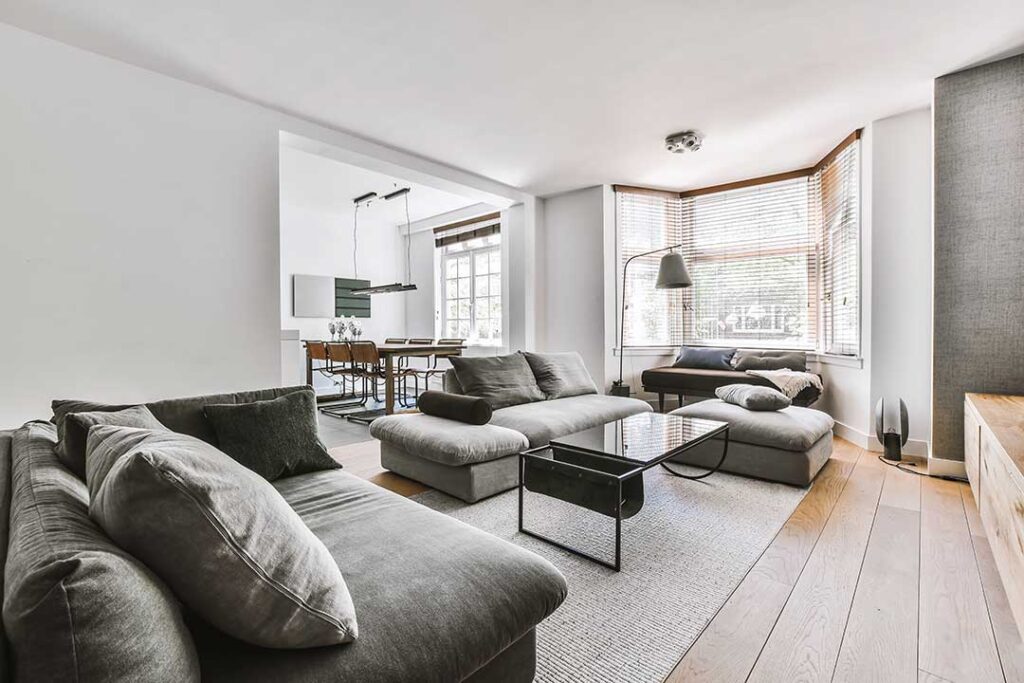
Arrange seating to encourage conversation and create an obvious walking path. Pulling furniture slightly away from the walls can make the room feel more intentional, even if the space is modest.
Remove extra chairs, oversized accessories, stacks of mail, and collections that dominate attention. Keep one or two simple decorative elements, such as a lamp, plant, or neutral piece of artwork.
If furniture is worn but structurally sound, clean it thoroughly and use simple textiles to create a more orderly appearance. Avoid covering every surface with pillows or blankets.
Kitchen
The kitchen should look clean, functional, and easy to work in. Clear most countertop items, leaving only a few useful or attractive objects if the space feels too bare.
Store small appliances that are not used daily. Remove magnets, papers, excessive decorations, and expired items from the refrigerator. Clean cabinet fronts, appliance surfaces, backsplash areas, and the space around the sink.
A bowl of fresh produce or a simple vase can add warmth, but the room should still appear practical rather than staged for a photo shoot.
Bedrooms
Make each bedroom’s purpose obvious. A bed, bedside table, lamp, and limited artwork are usually enough. Remove exercise equipment, excess storage bins, laundry, and work materials whenever possible.
Use bedding in solid or quiet patterns. If replacing bedding is not practical, make the bed carefully, remove extra blankets, and use matching or coordinated pillowcases to create a cleaner appearance.
Smaller bedrooms should not be filled with furniture. Showing open floor space helps buyers understand where a bed, dresser, or desk could fit.
Bathrooms
Bathrooms benefit from deep cleaning more than decoration. Scrub tile, glass, fixtures, floors, baseboards, and the area around the toilet. Replace worn shower curtains or bath mats if inexpensive replacements improve the room’s appearance.
Remove personal toiletries from counters and shower ledges. Keep towels neatly folded or hung, and avoid displaying medication, grooming items, or cleaning supplies.
Check ventilation, especially during humid seasons. Lingering moisture, mildew odors, or fogged mirrors can make a bathroom feel poorly maintained.
Basement, garage, and storage areas
These spaces often influence a buyer’s perception of the entire home. Clear narrow pathways, group stored items neatly, and remove anything damaged, unsafe, or unnecessary.
In a basement, use brighter bulbs where appropriate and keep furniture or storage away from areas that need to remain accessible. In a garage, organize items along the walls so the usable floor area is visible.
Do not conceal water stains, active leaks, electrical concerns, or other hazards. Staging should improve presentation without hiding conditions that require attention.
How can lighting improve a home without costly upgrades?
Lighting can make rooms feel larger and more welcoming. Replace burned-out bulbs and use bulbs with similar color temperatures throughout the main living areas so the home does not appear unevenly lit.
Open curtains and blinds before showings, clean windows, and remove objects that block natural light. In darker rooms, add a floor lamp or table lamp if one is already available. Clean light fixtures and remove dust from ceiling fans.
During winter or on overcast days, turn on lights throughout the home before visitors arrive. Entryways, staircases, hallways, and lower-level rooms should not feel dim or difficult to navigate.
What should Cascade Township homeowners consider seasonally?
Seasonal conditions can affect how a home looks and feels during a showing. In colder months, create a tidy landing area for coats, boots, gloves, and other outdoor gear without allowing the entryway to become crowded.
Use a washable mat near the entrance and keep floors dry and clear. If snow or wet weather is present, check that walkways, steps, and handrails are safe and accessible.
During warmer months, clean screens, windows, patios, decks, and outdoor furniture. Trim overgrown plants near doors and windows, but avoid expensive landscaping projects unless a specific problem is affecting access or appearance.
Buyers also notice indoor comfort. Keep the home at a reasonable temperature, reduce strong odors, and address musty smells rather than masking them with heavy fragrance.
Should personal belongings be removed?
The home should feel lived in but not highly personalized. Remove or limit items that make it difficult for buyers to imagine the space as their own.
Consider storing:
- Large family photographs
- Collections and highly distinctive artwork
- Political or controversial displays
- Excessive religious or cultural decorations
- Valuable small items
- Documents, bills, and personal information
- Clothing and belongings that make closets look overfilled
Personal items do not need to disappear entirely. A few ordinary signs of daily life can make rooms feel comfortable, but private or distracting items should be packed before showings.
What are common staging mistakes?
The most common mistake is spending money on accessories before addressing cleanliness and clutter. New decorations cannot compensate for crowded rooms, dirty windows, or neglected repairs.
Other frequent problems include:
- Blocking windows with furniture
- Using too many artificial scents
- Leaving pet items, litter boxes, or food bowls in prominent areas
- Filling every room with furniture
- Hiding maintenance issues
- Ignoring closets, garages, and unfinished areas
- Choosing highly personal colors or decorations
- Leaving outdoor areas untidy
- Taking listing photos before the home is fully prepared
A staged home should feel natural. If a room looks uncomfortable or impractical in person, buyers may question whether the presentation is hiding a functional problem.
How can homeowners decide what to store, donate, or discard?
Use a simple test: does the item help show the room, support daily function, or provide necessary storage? If not, it may be a candidate for packing, donation, recycling, or disposal.
Pack nonessential belongings early. This reduces clutter while also making the eventual move easier. Keep only enough furniture to demonstrate scale and purpose.
The goal is not to create an empty house. It is to make the home’s layout, storage, light, and condition easy to understand without requiring buyers to look past personal belongings.